Archive for category Portrait Photography

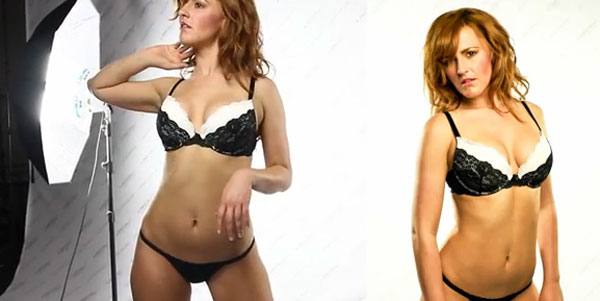
Using High Key For Lingerie Photography (videos by smokingstrobes.com)

Hi

I found a very nice site about sexy ligerie photography tutorials, it is called smokingstrobes.com, site writer Michael Zelbel is kind of a master in using small flash units for those kind of photographs, probably the best sharing photographer in that area that I can recommend. In his site you’ll get lots, tons of info about lingerie photography in a funny and easy way, including videos, diagrams and examples

I want to inroduce you to two movies shared on his site and his YouTube channel:

First one is about photographing lingerie in your bedroom.

In this setup Michael uses only one flash and a Translucent Shoot Through White Umbrella. This setup is preaty easy and fast forward as you may see in the video bellow, Michael let you all the data to replicate this setup in your home or ourdoor shootout:

  • Camera settings: 50mm Lens, F/2.8, ISO 100, manual WB 10000k.
  • Shooting from above.
  • One flash light: 100cm Translucent Shoot Through White Umbrella and a 58GN speedlite (something like the Canon 580EX, YN560 or Nikon SB900) at 1/32 power open wide for 28mm.
  • Whenyou want to add some more lighting atmosphere to the setup, Michael added another flash to the models right setup for 1/32th power of a 43GN (like the Canon 430EXII or the popular YN460II). The flash shoot through a yellow colored bedside  lighting lamp, if you don’t have one you can just use a sunny gel filter.

Second video is all about using a high key setup for shooting those sexy photographs.

Michael used here the corridor as the location for this high key setup, you can actually use any part of your house, as you only need the white surrounding for getting the high key effect. How this is made? simple!!!

Using 3 flashes as you need a  big lighting source to paint the background with white light (used two of the here) and one flash to add the light into the model front.

Two Canon 580EX at 1/4th full power painting the background in white light zoomed wide open at 28mm.

One Canon 430EXII at 1/16th full power, zoomed at 80mm to create a good light directed to the model.

Camera: ISO 320, F/8 for a good depth , manual WB 5800K, about 2.6m from the model.

Remote control : Michael used here a sophisticated digital remote trigger , but when using manual modes for all flashes, I use normal budget triggers.

This is it, very simple, about 5 minutes videos to let you a good idea on how to shot lingerie setups!
I’ll be happy if your share that page in case you liked it.Any comments are welcomed!!!

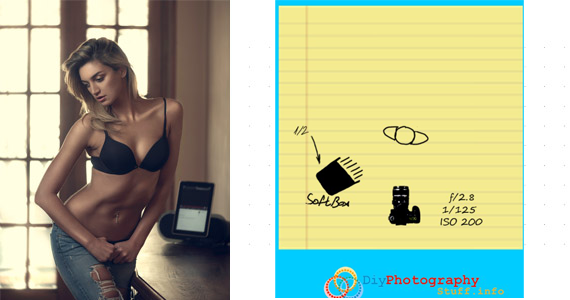
Basic Studio Lighting Setup – Zumba Model Shoot


Hi, this time I want to introduce you with Tomasz Nowak (photography site and facebook page), Tomasz shoots weddings and children in Poland, but as I found out is a very talented strobist photographer. I first met this simple studio setup on strobox (a source for many ideas for any level photographers). Tomasz uses here a basic two light setup, the main light is made of two entry level YN460II strobist style flashes in a softbox front left side of the model (in the next post you’ll see how he fixed them in) and another YN460II as fill hair light through a snoot from the back opposite model’s side .

So lets dig in and see how its done!!!

Read the rest of this entry »

Panning Photography Tips – Circular Panning Trick

We had an article about panning photography a couple of month ago, you can read it here – Panning Photography.

In General panning is all about capturing images while the main photographed object is in some kind of move, what kind of movement? Any type, it can be a car just passing  by  or driving away, a scooter or an athlete running. Panning is known by effect created by following the photographed object while this camera movement to keep track of the main subject creates a blurred background behind the photographed model. To achieve this you have to shoot at slower shutter speeds than you would have if you just wanted to shoot a clear image.

The two key points to great panning effect:

1.The camera and the photographed subject are moving together synchronized as one body.

2.The camera’s shutter speed has to be slow enough to let the panning effect take place. Not to slow so the photographed object will be blurred too and not to fast so the blur effect will be created.

Read the rest of this entry »

Ben Sant’s Protrait Tutorials

Hey, I wanted to share with you a very talented photographer, Ben Sant, based in the USA.

Ben has on his blog some very useful behind the scene tutorials for portrait and fashion photography using small of camera flashes, like we all love to use.

I include here two of his videos, one covering some tips on one of his winter fashion shots. en has a very unique way to explain stuff and a fresh approach to photography, so I’m pretty sure you’ll enjoy this.

On the winter set he mainly uses only one flash, trigger and a 43 inch studio umbrella (and a boom stand), this type of studio equipment is very affordable and I’m pretty sure most of you reads own this combination.

This video covers two basic concepts:

1. Underexposing the background about 1 stop for getting black and contrasted shadows.It is very important to under expose the background when photographing snow. Snow is one of the trickiest modes the camera’s light meter can face , so Ben tips us to check the images histogram while shooting so we don’t over expose the snow.

2.Lighting up the model with the main flash. Ben uses a Nikon SB-800 and a 43inch fordable umbrella on a book lightstand pointing the model from above.

Bottom line-

I really like Ben’s work and I’m pretty sure I’ll post about him in he future as he has another couple of great videos both outdoor location and indoor.

You can keep track with  Ben’s work on his video channels and blog (I’m listed to all three!)

Blog

Vimeo

YouTube

Read the rest of this entry »

Lighting in 3D – Guest Post

This time I want to introduce you with Matan Eshel a very talented proffesional Photographer from Israel, mainly photographing landscape,portraits and fashion photography. You can see some of his beauty work in his online gallery – Matan Eshel Photography .

Matan writes here on his view on creating 3D view in photography, so please read and comment below for further questions or i


Read the rest of this entry »

5 Basic studio lighting setups

Hey, wondering the web I found this nice site (I don’t remember how I  got there, probably from one of the forums). It has some great content and very nice video tutorials (although they start with some annoying commercials, but I guess we have to make your living somehow…). One of those great video tutorials is about a subject that we all like – portrait photography setups. In this one you will get 5 setups to learn from and you may see how the pros (video taken by Nick Carter- photographer and Kamara Innis – model ) are doing their work.

The Video: Read the rest of this entry »

Tags:

Two lights dramatic portrait

Hey,Nice to see you guy reading me again,if this is your first time here ,you could register to my free Email RSS feed so you wouldn’t miss the next tutorial.I saw this kind of picture in a post written by a great studio photography named Robert Seale.In his article he wrote about how he photographed Lance Armstrong in his studio.As I don’t like Lans to much (I ride the bike,but don’t like the drugs thing in his sport),but I got the sympathy for his work in the research about cancer.Back to our tutorial,Robert used some big lights in his Lans shootout,180cm softboxes that I don’t thing the most of you guys keep at home to get really amazing shot.I asked my self how can I do it in the budget way that I like so much?So instead of the 180cm octagon softbox I’ll try to use the 30cm DIY shoebox softbox that I made a couple of weeks ago to get “similar” results.

P.S – If you get Lans to your studio I recommend to hide the shoebox softboxes and try something else…

Lets see what we got and how I made the shots.

set1-2

What I used for the shots:

  • Two DIY small softboxes made from shoebox.
  • Two tripods (left- studio tripod and right- camera tripod) .
  • Flashes triggered by : left flash-cable and right flash-radio trigger (didn’t had the batteries to operate the left side receiver,so used a cable).
  • Two Canon speedlites : left-Canon 580EXII and right-Canon 550EX (you can use any flash with manual power settings).

Read the rest of this entry »

Tags:

Portrait photography routine-Part I

Part I of the Portrait photography routine series will cover the routine for using two flashes:

  1. Flash to put light on the background.
  2. One flash to expose the model.

The principals for taking a good studio like picture  are about the same for 1-1,000,000~ flashes.More flashes you have.More control you can get for your final result.More complicated work.(When doing it well) More professional result.

So lets start the routine for model shootout while using “only” two flashes:

  1. Start by setting up your location:It doesn’t always has to be a pro white background.If you are looking for the white background,like in fashion magazine pictures,you can use a white wall behind the model.
  2. Setup the fill light (background flash).Take a good exposure for the background.Before even setting up my main light,I expose the background the way I want.For getting a really bright white background I set the backgournd flash to relatively high output,in order to get it right (I recommend to expose the background two stops brighter than the front model in order to get it really bright).
  3. Setup the main flash.After setting the fill flash its time to deal with the main flash.Put it up and try do shoot through some diffusion panel-softbox or an umbrella will do a good job most of the times.You could checkout our DIY softbox for a quick easy softbox.
  4. Take some test shots.I usually take some test shots before letting the real model work.You could use a friend or assistant (a friend) for those test shots.Adjust the main flash correctly.It will be a smart idea to check your histogram for finding the sweet spot-well exposed background and model.
  5. Start shooting.Now that we are finished with the testing shots it time to let the model in.

Let us know how those tips helped you,and share your tips with our readers!

Basic Lighting Setups-Paramount(Butterfly)

There are some popular and basic setups used for portrait photography.

The paramount lighting is a very popular lighting setup for shooting female models, also called sometimes Butterfly Lighting as the shape of the shadow it creates under the nose.This lighting setup is common glamour lighting style. It works best suites models with strong cheek bones and good skin.You usually don’t use  The paramount (Butterfly) lighting setup for shooting male subjects.

Main tips for this setup:

  1. Place the main light high (above the camera/lens axis) and the fill light directly under it (under the camera/lens axis).
  2. Keep the light close to the subject.
  3. This setup is called the butterfly because it shapes a butterfly shadow under the models nose.
  4. Be careful not to place their eyes in shadow.
  5. Fill light is placed roughly at head height.
  6. The fill light can be accompanied or even replaced by a reflector under the face of your model,to lighten the shadows under the chin and lower cheek.

Examples will be available soon.

Share your tips with us and place your comment here.

Tags: , ,