Archive for category Tips

Canon 5DMKI Vs. Canon 40D

Hey

I use for most of  my photographs one of my two Canon 40D. When the Canon 5DMkII got out to the market, there where plenty of the 5DMkI available for sale as second hand cameras. I had a big strugle what to do whether to get a copy of the 5DMkI to couple with my 40D or to keep the 40D instead.

The 5D advantages are clear:

  • Full Frame camera.
  • 12MP.
  • Very nice depth of field.
  • 100% View finder.

The 40D advantages are clear too

  • Better focus speed.
  • More up to date DIGIC processor.
  • Bigger and much better LCD screen.

So recently someone popped that question in one of the forums that I visit in. My reply was: I rather keep the 40D and if there will be an upgrade it will be to the 5DMkII or the Canon 7D. But a very good photographer made a test between those cameras, see it yourself, it will help you decide if you are in the same problem (APS-C Vs. FF).

PS

The test run by Allon Kira on of the best Macro and nature photographers that I know!!!

Allon Kira

Get in to check the rest of the test :

Read the rest of this entry »

DIY photography-How to photograph Lightning

Taking lightning photographs are actually surprisingly very very easy!For such kind of photographs (I accidentally,on the way took this one) you almost don’t need any pro equipment at all.

Get in and read my easy and simple tips on how make that simple diy photography of stormy lightning.

diy-photography-lighting-photography

Read the rest of this entry »

Tags:

Easy Ebay photography using a light tent

We all know how important it is to get a good picture in order to get a good selling page in your eBay.com store.

A good picture will generate more traffic to you store and will probably will get you  better conversion rate,that means in simple words MORE MONEY!!!

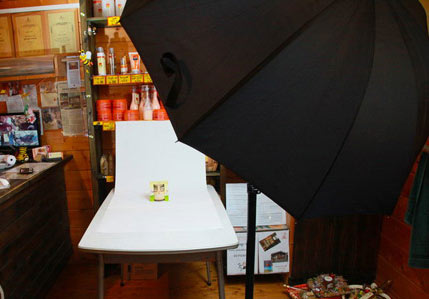
Here I’ll cover the basics of how to shot a good picture with a low budget studio equipment.One light tent and three flash units might cost you less than  90$.Get this and you’ll be ready for your eBay product photography homebased studio.

eaby_photography_with_light_tent_02_resize

Read the rest of this entry »

Cookie Photography-the cookie shootout

The cookie post started when I had a newly wed couple that came to my office to get their wedding album.I had to bring some goods in to serve the guys,so I went don’t to the local super market,having only a couple of minutes to choose the best sweet for my visitors,I decided to go with the chocolate chips cookies that I all ways love!

When I took the box from the self I said to myself ,”hey that’s a great photo on the box I want to do that too!”

Here  is one of the first  pics that I took:

the_cookie_01

Get In and read the rest of the story (I bet you’ll want those chocolate cookies too)!
Read the rest of this entry »

Tags: ,

Ebay White Balance lens cap,is that good?

Well,as you may all know,the issue of getting the right color temperature,also known as White Balance is one of the biggest influence prospect in the final picture quality  you can get out of your camera.

When you get into some mixed light scene your camera auto WB (White Balance)  metering system might loose its north.Therefor when I shoot wedding or commercial events I’m looking for some more accurate WB measuring system.

Two of the most popular tools are the Gray card and the Lens cap.

The gray card is a simple gray card that as you take a picture of it in the scene you are shooting will help the camera manually set the WB.The lens cap is a cap that you put on your lens and and it suppose to white blank the camera.After you take a picture with the lens cap on you can set the manual WB.

There are some white balance lens cap that sell on ebay for about 5$.I wanted to test that with the more old fashion gray card.So lets see what wee got here:

WB_TEST

So what is my conclusion?

  • The Lens cap gave me to cold WB.
  • The camera auto WB was to warm.
  • The Grey card WB was more natural colored .

The winner:Gray card!!!

Want a homemade photography studio?Lets see what you need

Many times I’m getting asked:”Hey I know you strated your photography journey from a small home made studio,What do I need to start it (hame made studio)?”

So I go on and answer,could you be more specific? What are you exactly asking?

I’m building a DIY Photography Studio in our empty basement or my sisters room,

  1. How much space do I need, if I want to shoot mainly portraits? For that question I always say, that you don’t need to much space at ll!!! If you are about head shots, in many times you even don’t need to clear a room! Some of my favorite portrait head shots are photographed in front of the guests room wall. You’ll need to get some free room only in case which you’ll want to get full body portraits and posing.
  2. How much room will i need in that case?For full length portraits I usually use my homemade photography studio, who is in a long room that is 3m wide 7m long,the longer and wider is the better (always ;-) ).Wide room will let you use seamless paper as background and reduce the flash reflected from you strobes.Long room will let you be more flexible with your lens selection and light position.But you don’t must have a 3m*7m room, a normal 3m*4m bedroom will do the job.
  3. What kind of lights will I need to buy for a beginner?The fun thing here is that if you are a total beginner, you only have a digital pocket camera and you want to get your home made photography studio, you could use normal flashes! Thats all,go on to office depot or home depot and buy two normal bulb projectors with stands and you are of to go and start your own homemade photo studio!
  4. My biggest tip is : if you want to start homemade photography studio just for fun, don’t go and spend to much money on equipment you don’t really!!! Always strt small, learn to use it and get the best out of it. If you think you need something better, put the old stuff for sale or use it as a backup and buy the next level.  If you want to go on and be a pro, get to your local studio photography store and buy the best that you can get!!!
  5. Remember, most of as do photography for fun, If its all about fun you’ll get the same smile when taking portraits with 10000$ studio budjet or 500$.

Tags: ,

Controlling the ambient light -Part I

Controlling your ambient light in your studio shots will let you much more control over the total image output.In the previous discussion about the ambient light we got to the point that the amount of the ambient light in your pictures is determined mainly by the shutter speed (in opposite to the flash light in the picture that is controlled by the aperture value).

In this first part of the discussion about the ambient light in a flash controlled environment we will   give an example on how to take out the ambient light from your pictures.It could be used when you shoot a model on a white background as a white wall or some paper.When you control the amount of ambient light in the picture you can actually can give the white background any gray color shade you want,for white to totally black.

In the example below,the flash power is fixed (Canon 580EX  1/32 max power) the camera aperture is fixed on f/5.6 and the ISO level is also fixed to 100ASA.The only parameter we change in the picture will be the shutter speed.It actually very surprising to find out how the from models exposure isn’t changed as we change the shutter speed.This will be the best example to the fact that

SHUTTER SPEED CONTROLS THE AMBIENT LIGHT IN A FLASH CONTROLLED ENVIRONMENT!!!

We change the the shutter speed by 1 stop jumps -

1/8

1/15

1/30

1/60

1/125

1/250

Take a look for the changes in the ambient light in the picture.If you have any ideas or pictures that shows us the ambient light,let as know!

1-8sec

1-15sec

1-30sec

1-60sec

1-125sec

1-250sec

setup

Tags:

Best off camera flashes under 100$

As you may know if you read my site,or if it is your first time around,I do recommend to learn about flashes and lighting by testing the studio setups that you’ll find here and on the web with small flashes.This will allow you not to spent a lot of money on studio strobes before even knowing about flash photography and if you’ll like it at all.

Almost every one has with his digital camera an off camera flash.Usually it will be a good start to explore your creativity with light and studio photography.Two lights will more than double the options.In this post I’ll will go over some of the most affordable flash units that you can get.Don’t feel cheap , as they give great value for the money.In this category I listed the flashes for the price range 50$-100$.So dig in and see which will be your choise for the first/second flash!

Vivitar 285HV Auto Professional Flash

Vivitar 285HV Auto Professional Flash

One of the most popular flash unit as for the strobist.com.The built-in variable power of the Vivitar 285HV auto professional flash provides you with fill flash and the ability to shoot properly exposed rapid-sequence pictures. This vertical bounce flash gives your photographs soft, professional lighting. The four f-stops give you control over the flash distance range and the depth of field, while the auto Thyristor circuitry allows for a faster recycling time as well as more flashes per set of batteries.

Sunpak PZ40X II Power Zoom Digital Flash

Sunpak PZ40X II

I have to say that this flash unit looks very impressive.With digital operation and a clear LCD monitor its will give you a great budjet option.

Sunpak, a division of ToCAD America Inc. announces the upgraded version of the popular Sunpak PZ40X, a compact, lightweight, full-featured, shoe-mount electronic flash unit for digital and film cameras. The new Sunpak PZ40X II retains all the advanced features of the previous model, but it is now dedicated to the top-selling Nikon D50, D70/D70S, Coolpix 8800; The new Sunpak PZ40X II also works manually with non-dedicated cameras employing a single-contact hot shoe. The PZ40X-II is also backwards-compatible- with TTL metering for all TTL flash Nikon Camers And even though it is 40% smaller and significantly lighter than previous flash units with the same features, the Sunpak PX40X II has an impressive ISO 100 Guide Number Range from 60 at the 24mm zoom-head setting to 120 at 80mm. The Sunpak PZ40X II provides such advanced features as TTL auto flash, i-TTL for Nikon, a large, backlit, full-info LCD, and a power zoom-bounce flash head covering 35mm-equivalent focal lengths from 24-80mm in continuously variable auto mode, or 5 manual steps. Tilt positions range from zero to straight up for maximum bounce flexibility, and the built-in, near-IR auto-focus-assist beam turns on automatically when needed. Other features include: 5 power ratio settings down to 1/16, flash-exposure confirmation, bar graph flash range display, and power-saving circuitry that automatically set the unit to Standby Mode after five minutes.

Metz MZ 36341 36AF-4C E-TTL Flash

Metz MZ 36341 36AF-4C E-TTL Flash

Metz is one of the best third party company out there.Some of the canon users will say that the pro Metz flash is better than the Canon 580EXII.It is very noce to know that Metz also has a budget unit.This Metz flash is designed to be totally computable with your new Canon Cameras sophisticated TTL system. Featuring an easy to read, backlit display, you will find this an extremely easy to use reliable unit. Technical specs: film & digital TTL; auto shut-off; AA battery size; battery type: Alkaline. NiCad. NIMH battery type; coverage: 0.94 in.; depth: 3.74 in.; display type: LCD; exposure OK indicator; extended zoom; guide number @50mm (ISO 100): 30 guide number (meters); height: 4.53 in.; integrated AF measuring system; max guide number (ISO 100): 36 guide number (meters); max recycle time: 5 seconds; number of batteries: 4; tilt: +90° head tilt

Phoenix DZBIS-112CII Digital Autofocus Flash

Phoenix DZBIS-112CII Digital Autofocus FlashPhonix offers here the most less expensuve unit around.With your standard zoom, the built-in flash is usually effective to only about 13 feet, and that’s when your zoom lens is set to its widest-angle setting. When you want to zoom in on the action, you’ll find that the built-in flash does exactly the opposite of what you want. Its range is reduced to about 10 feet, and sometimes even less! It is even more annoying if you have a 70-300mm telephoto zoom lens. What is the sense of having the magnifying capability of 300mm but your camera’s flash is only effective to about 10 feet?

When you want to use your zoom’s telephoto capability indoors, requiring the built-in flash, your pictures come out dark, or even worse, not at all! Compared to your built-in flash, the zoom head of the Phoenix DZBIS-112CII (set at the tele position), allows you to shoot up to 3X further away with improved color, more natural lighting, and added depth to your pictures.

In addition to pure power, this Phoenix flash provides better looking photographs. It reduces or totally eliminates the annoying “red-eye” effect. Even when using the red-eye reduction feature of your camera (necessary because the built-in flash is too close to the lens) the flash reflects off your subject’s retina directly back into the lens and often results in pictures with “red-eye”.

The height advantage of the Phoenix DZBIS-112CII Flash greatly reduces or eliminates this “red-eye” effect. If your blue-eyed subjects still get “red eye”, this can be totally eliminated by using the bounce/swivel feature of the flash head to “bounce” the light off a neutral-colored ceiling or wall, for professional looking portraits.

If you think I missed someone from this list you are free to let me know about it.Just post a comment below.

Enjoy!!!

Bounce flash products

Going around the web I found a manufacture of really big,but portable diffusers.

The good thing about it is that they have an online catalogue and downloadable catalogue.In this catalogue there are many examples on how touse their products,much of them also show the setups used for taking really professional shots.You could and should download the catalogue and learn how the pros  use those bounce panels.It will be you job to learn how to adjust the stuff that you have at home and imitate the effect of the real one.

Of course you could also buy their products,there is an online price list available.

Click here for the online catalogue.

5 Things You Didn’t Know About Hot-Shoe Flash

Popular Photography magazine (I’m a subscriber for at least 10 years)Published in their August issue a very interesting list about the misunderstanding or things you should know about your hot-shoe flash.

You could read the full article in the Popular Photography web site here.

Here is a summery of the points and what I think about them:

  1. TTL metering is overrated-I use the manual mode for my flashs almost all the time.I use manual mode for my wedding photography and for studio photography as well.For studio work weather if work with strobes  you even don’t have the TTL option at all,I take it step by step and configure the exposure using my histogram and examining the pictures in my camera screen.As for the wedding photography,I use the flash in manual mode almost during all the event except for the location shots.
  2. Batteries are a big deal-Allways by the best batteries you can afford.It will be an absurd to buy a 400$ or more flash head and getting a 5$ office deppot 2700mha set.
  3. Manually setting zoom head focal length gives you special effects and other cool benefits-About the creativity of using the manual zoom for your flash you can read in a previous article I wrote in this site dealing with the ability to create a snoot like effect if you zoom the flash beam to 85mm-105 mm,you should try it its a fun game .
  4. Hot-shoe flashes aren’t confined to hot-shoes-Yes they are right at popphoto! I use the hot shoe flashes of camera all the time,learning to control the hot shoe flash of camera will improve your photography amazingly!!!
  5. Shoe-mount flashes make experimenting easy- this one is much like 4. Use the flash in the camera manual mode and you’ll learn a lot about the abilities of your camera.The problem with using the TTL and automatic camera modes is that the camera will decide the exposure for you even when you try to achieve something else,you’ll get the same exposure any time (unless you use the flash exposure compensation ).

Share your tips here!